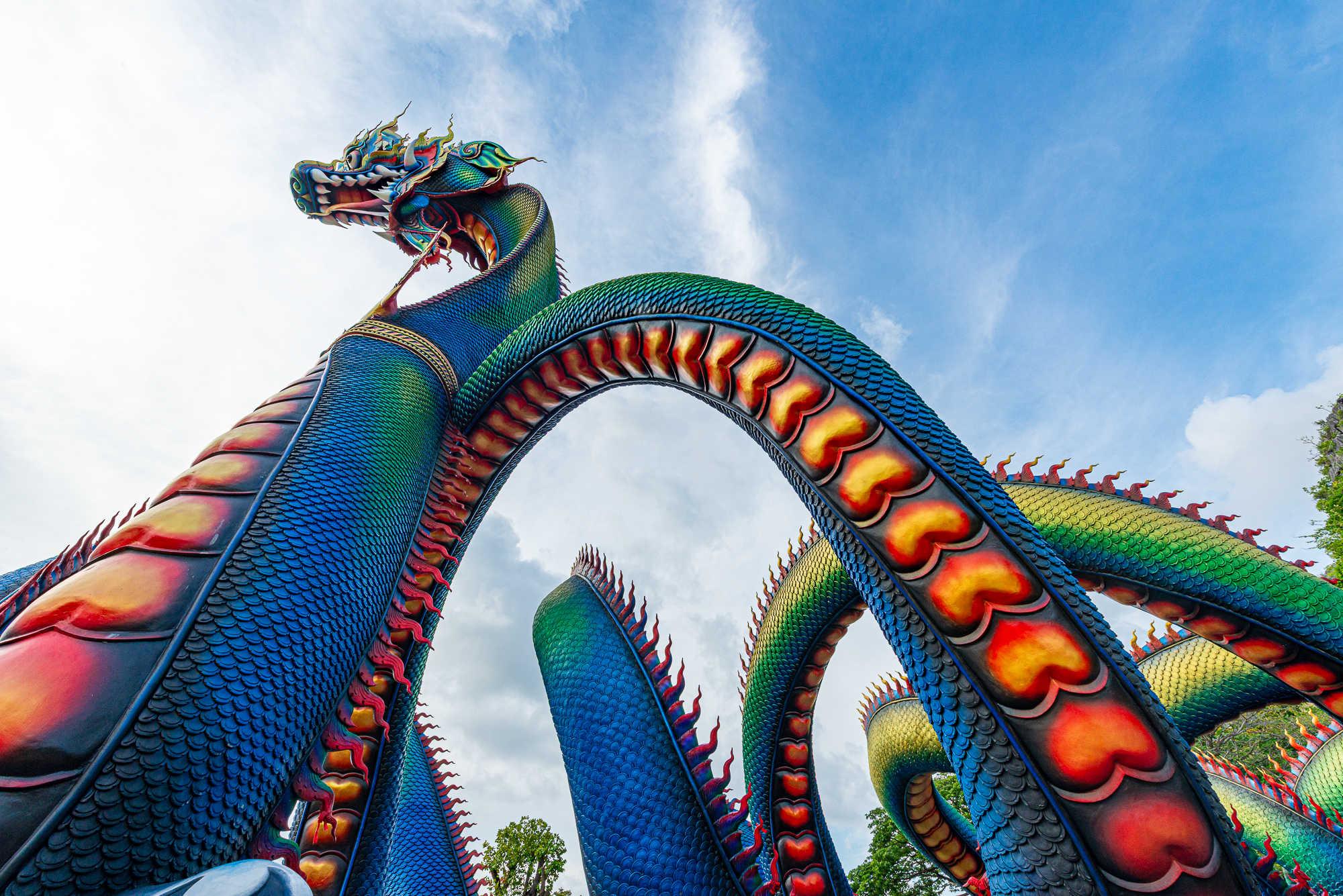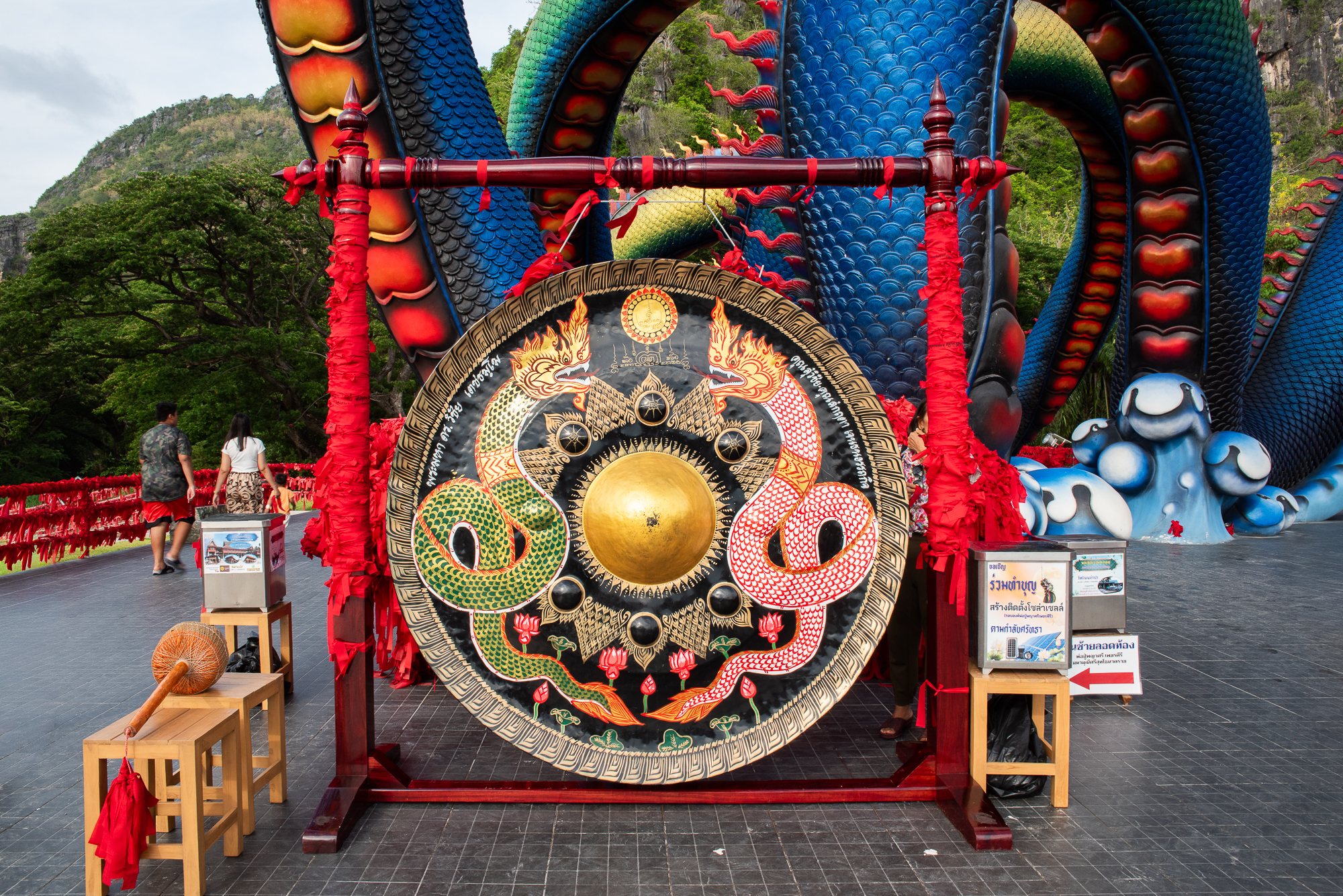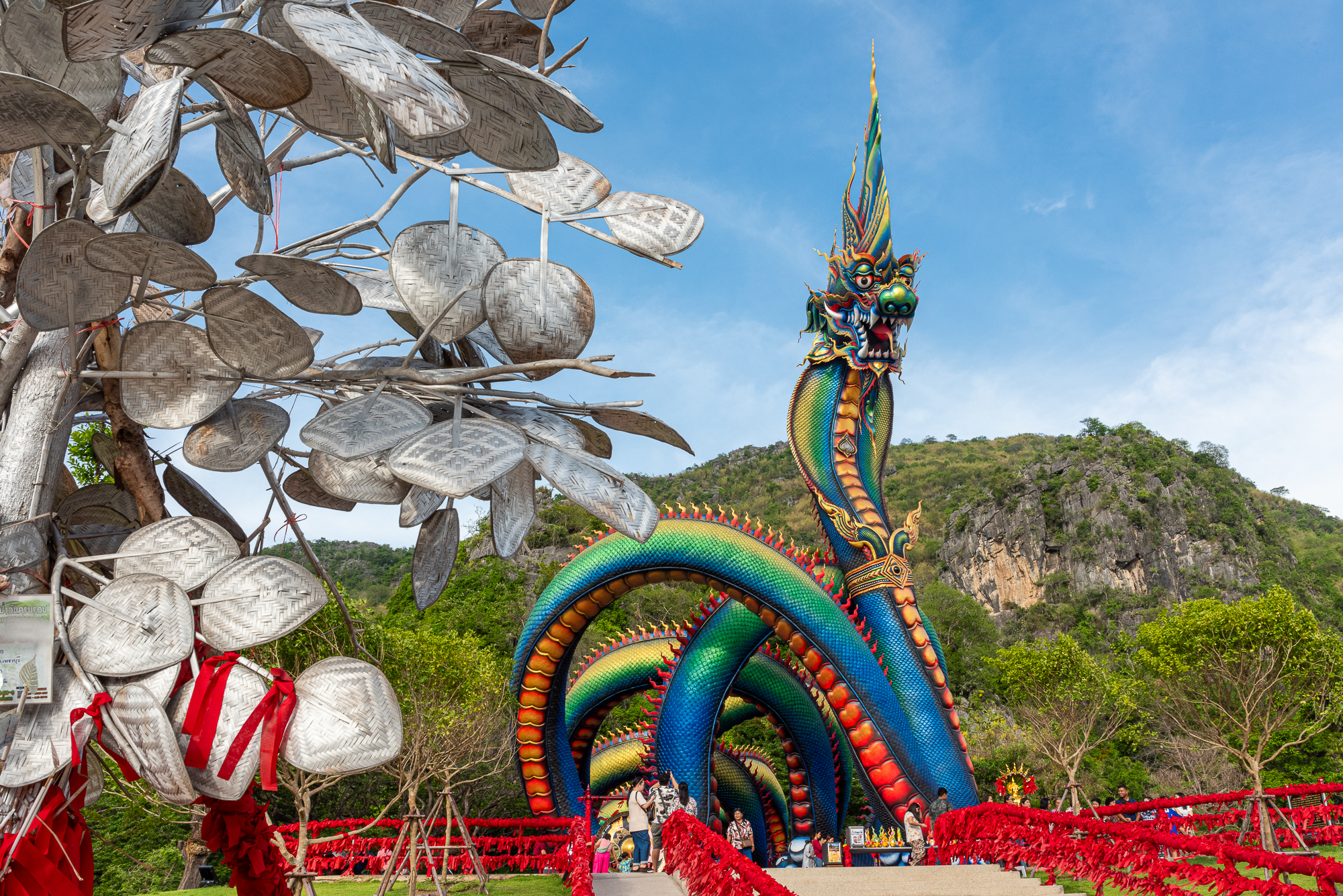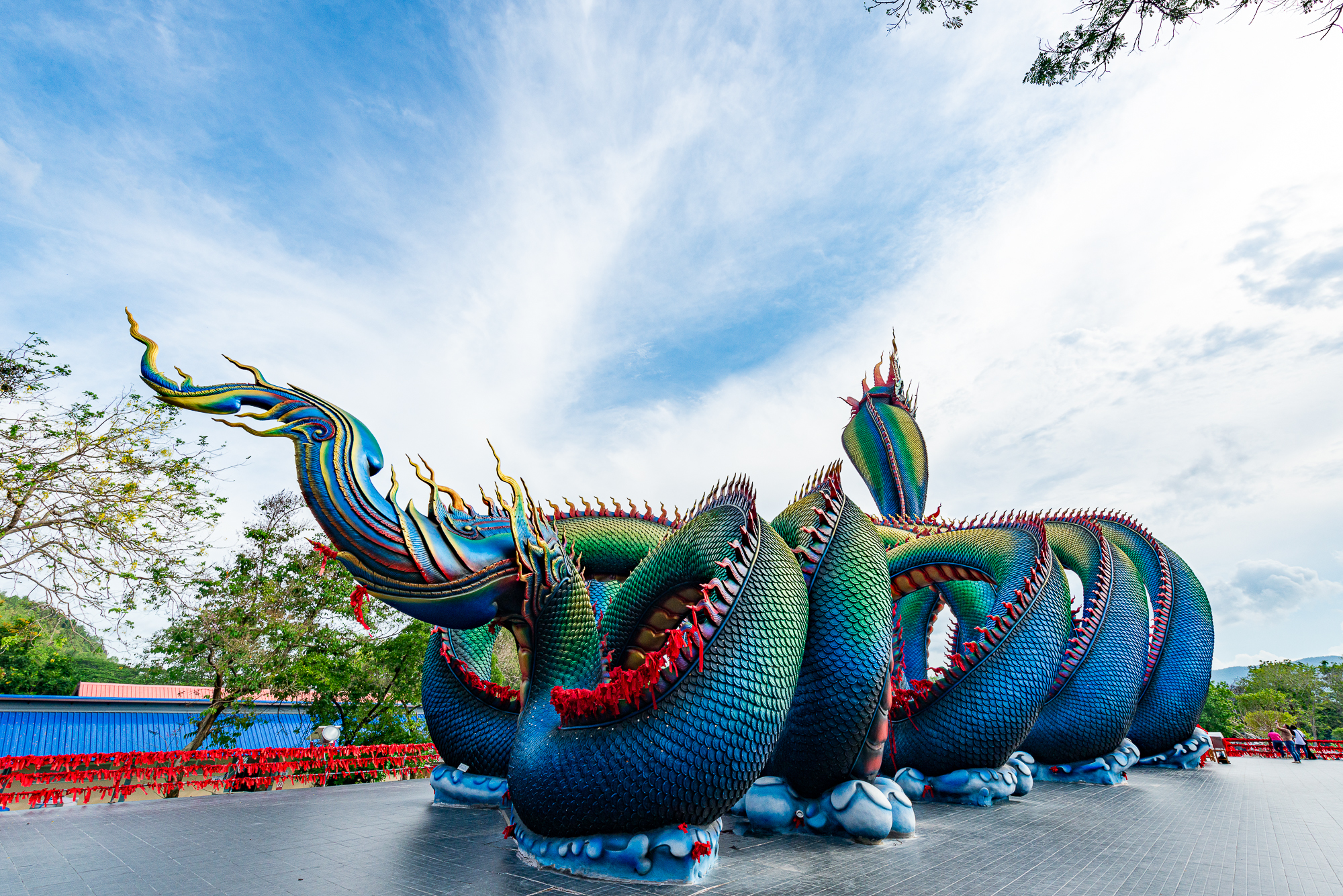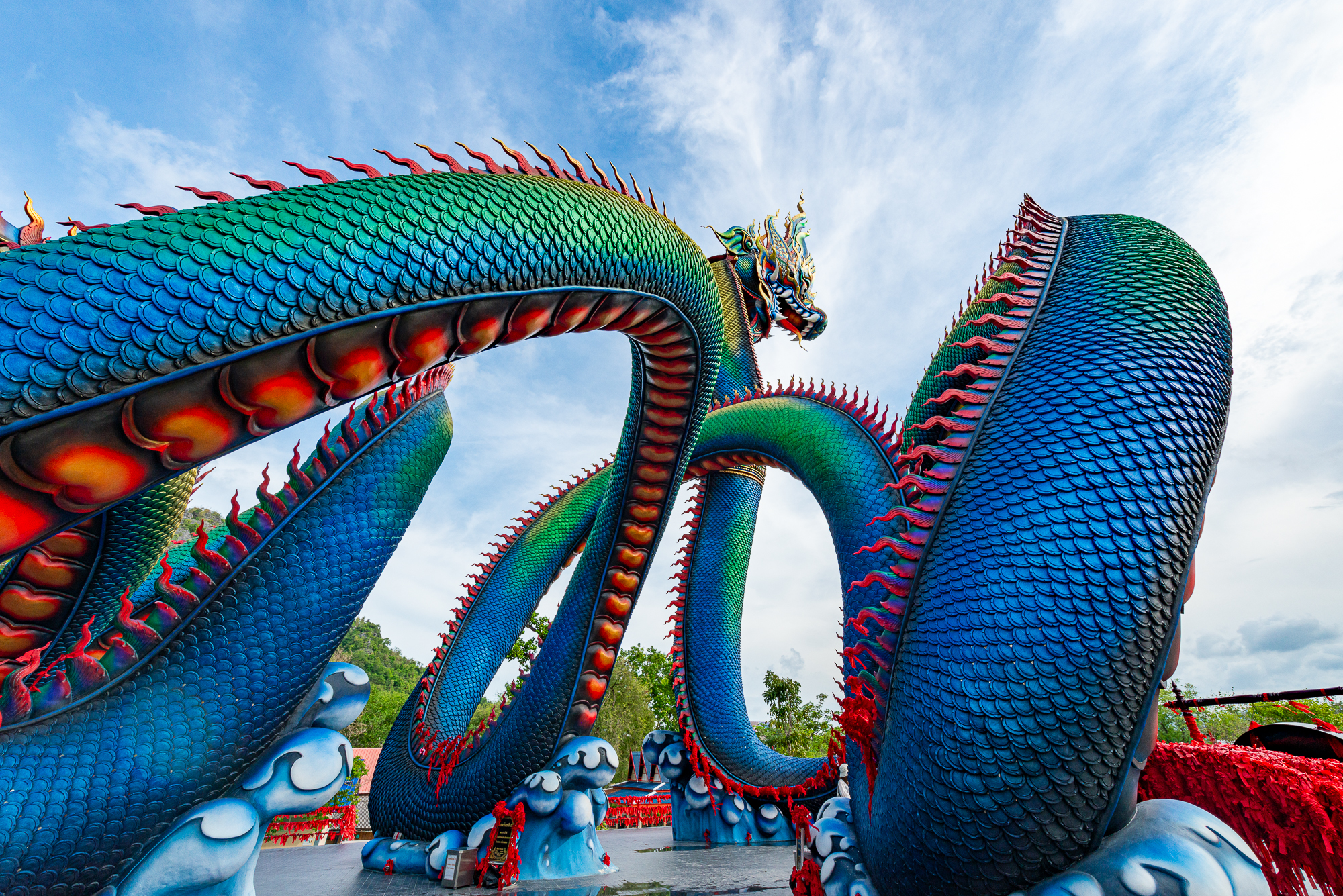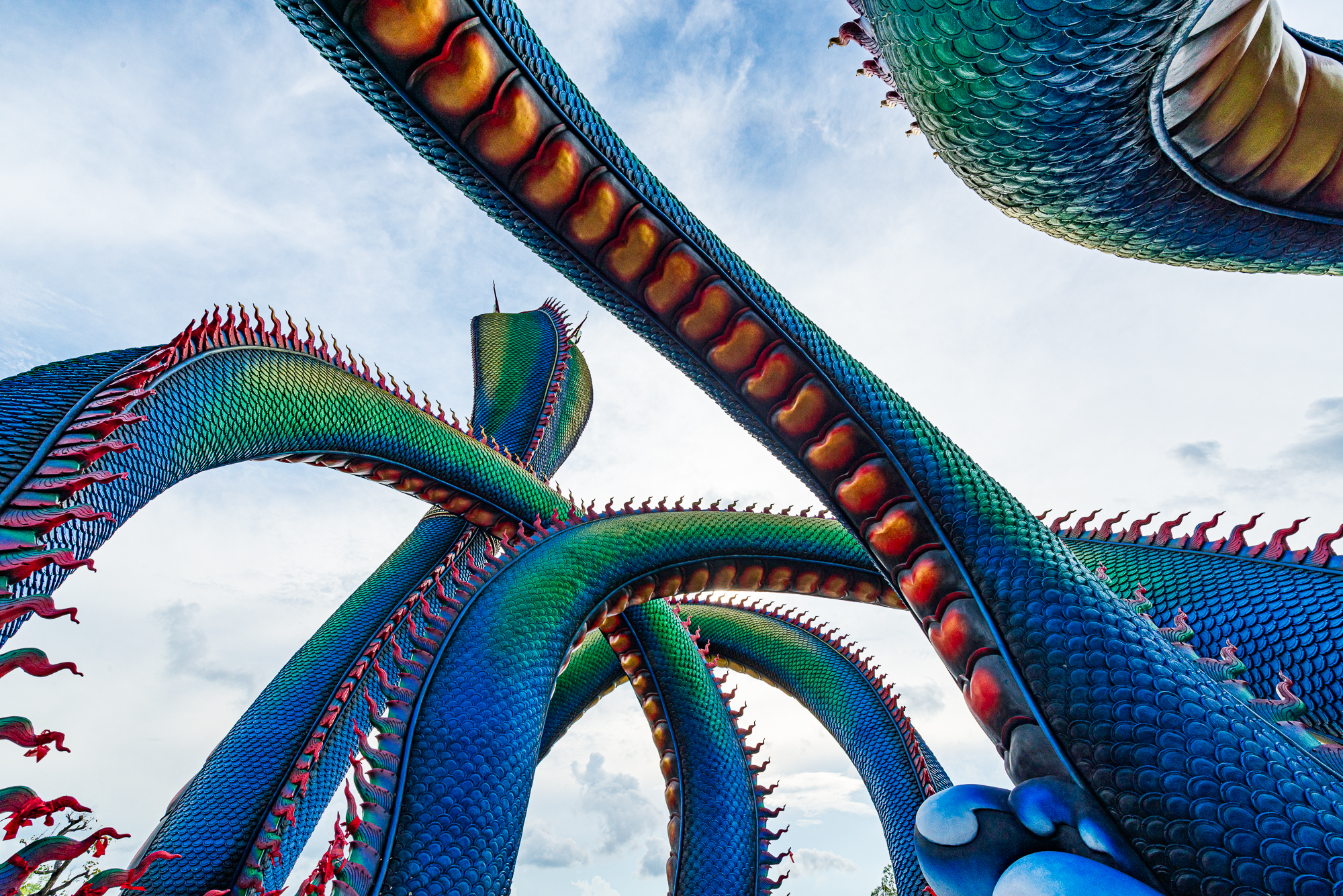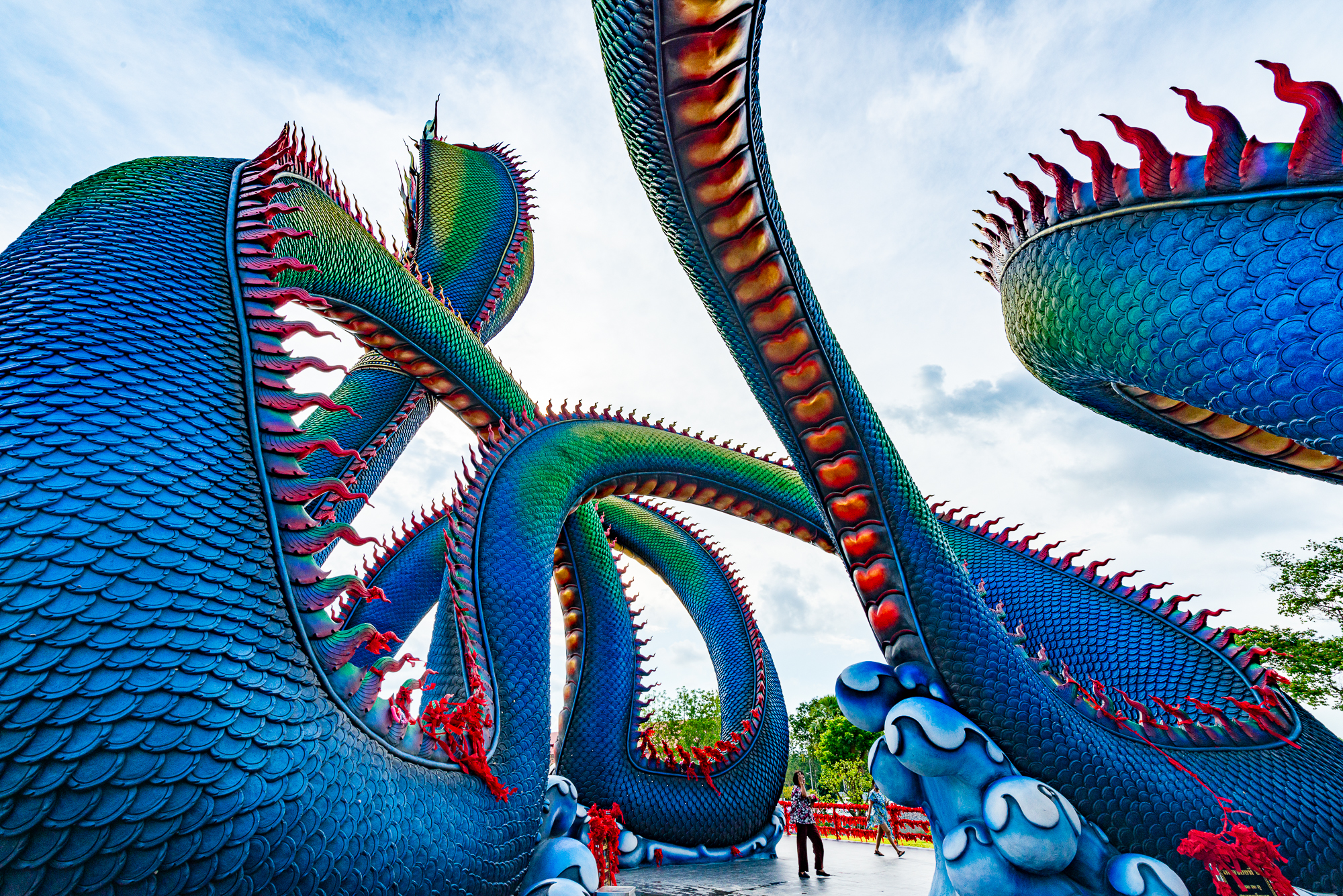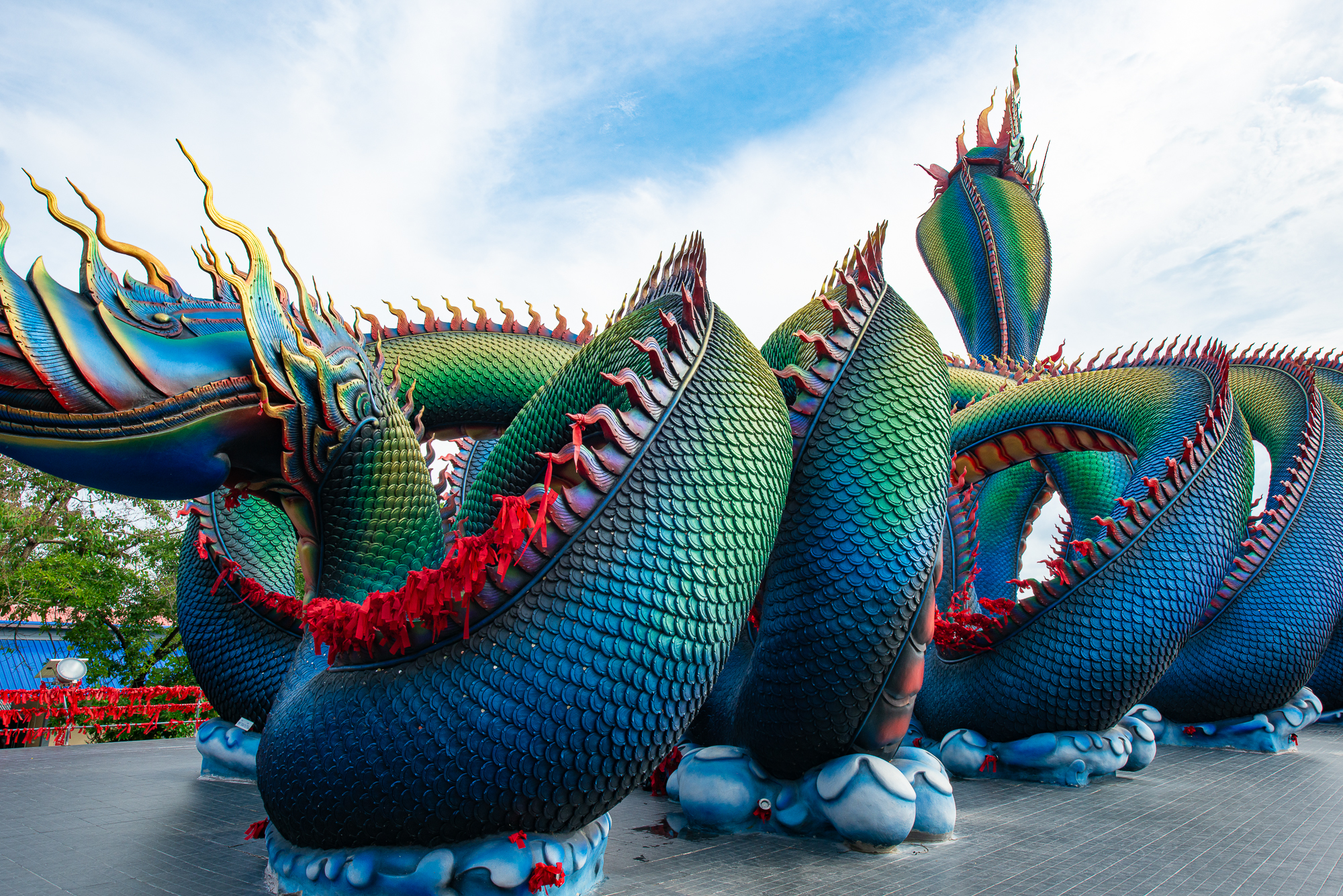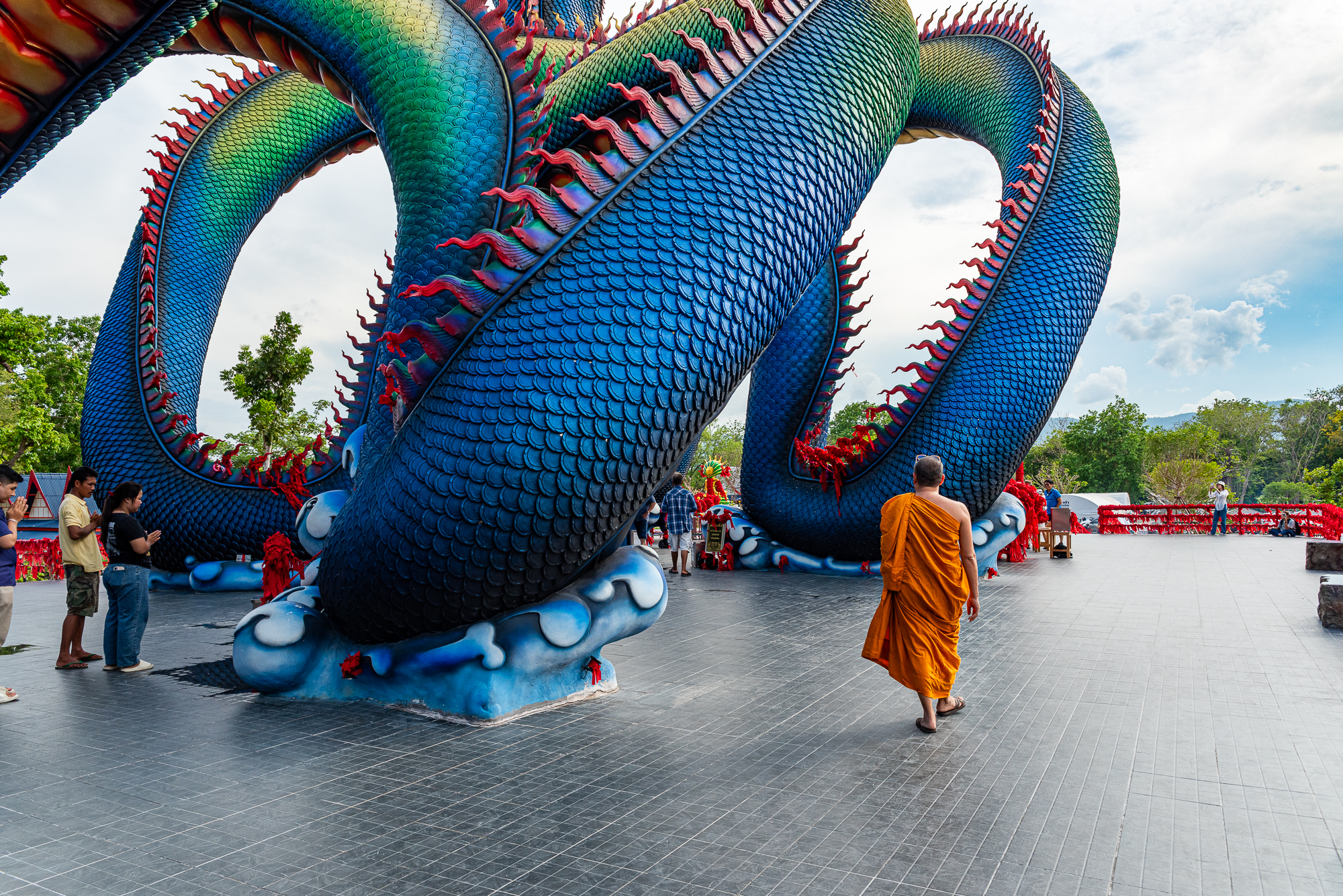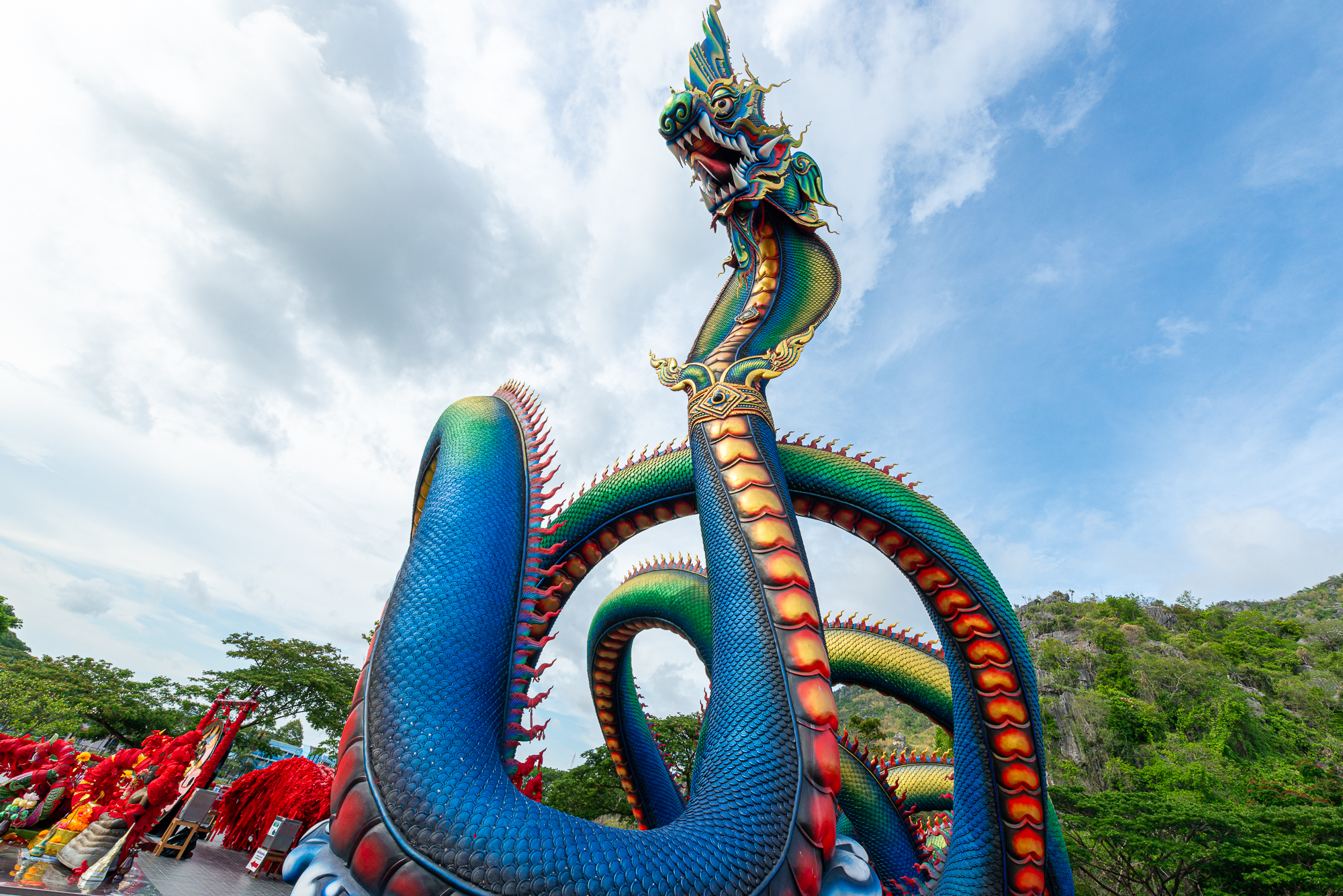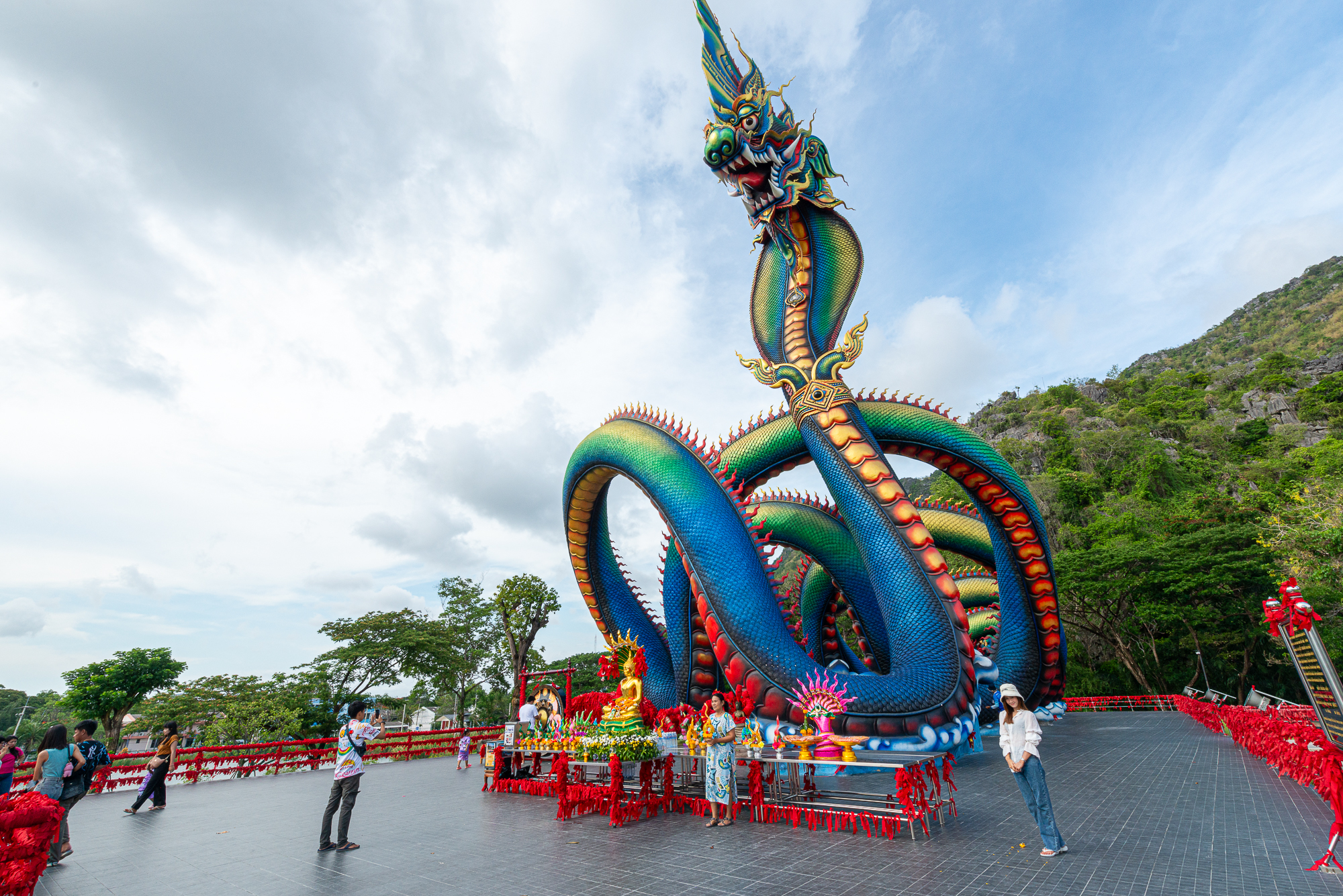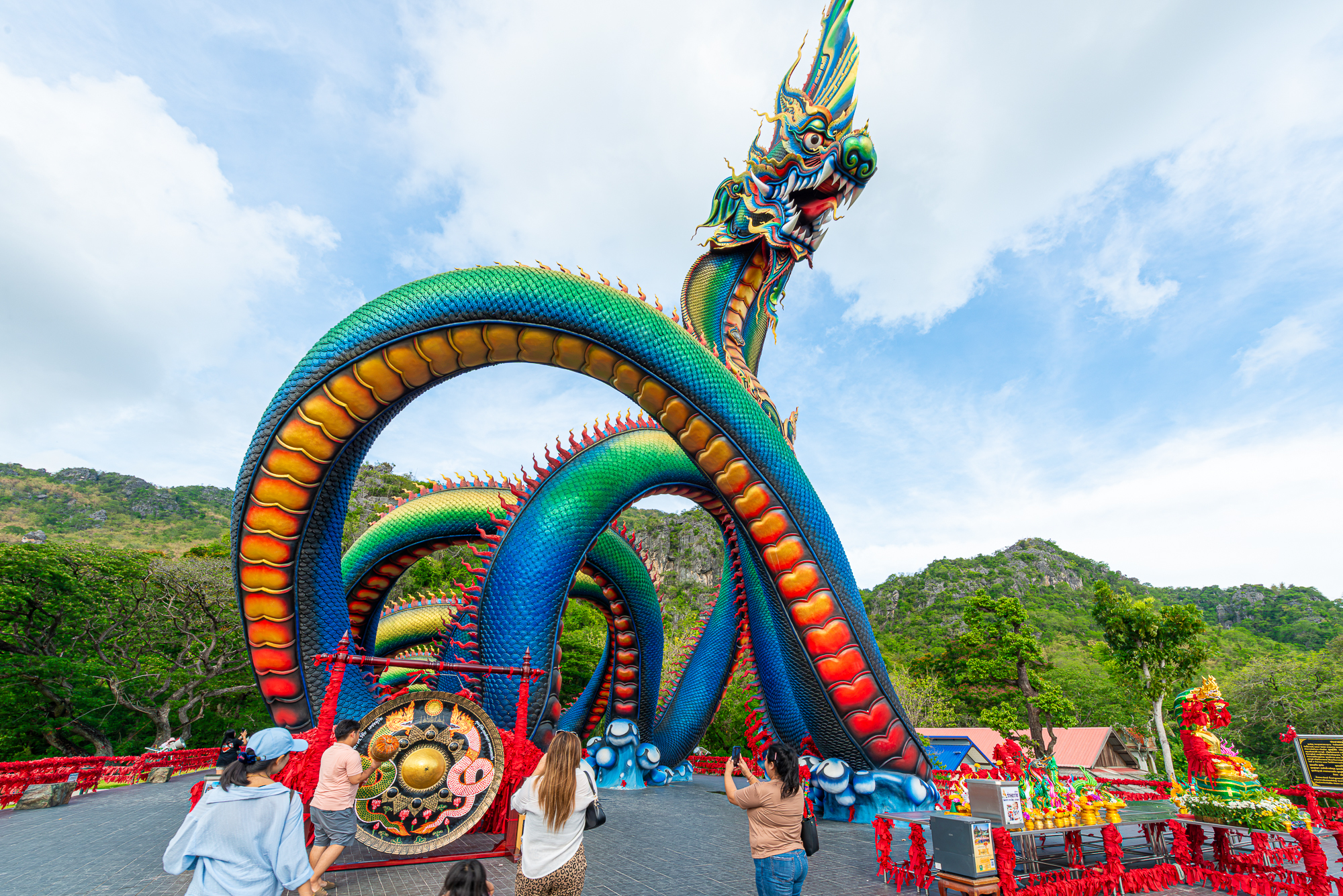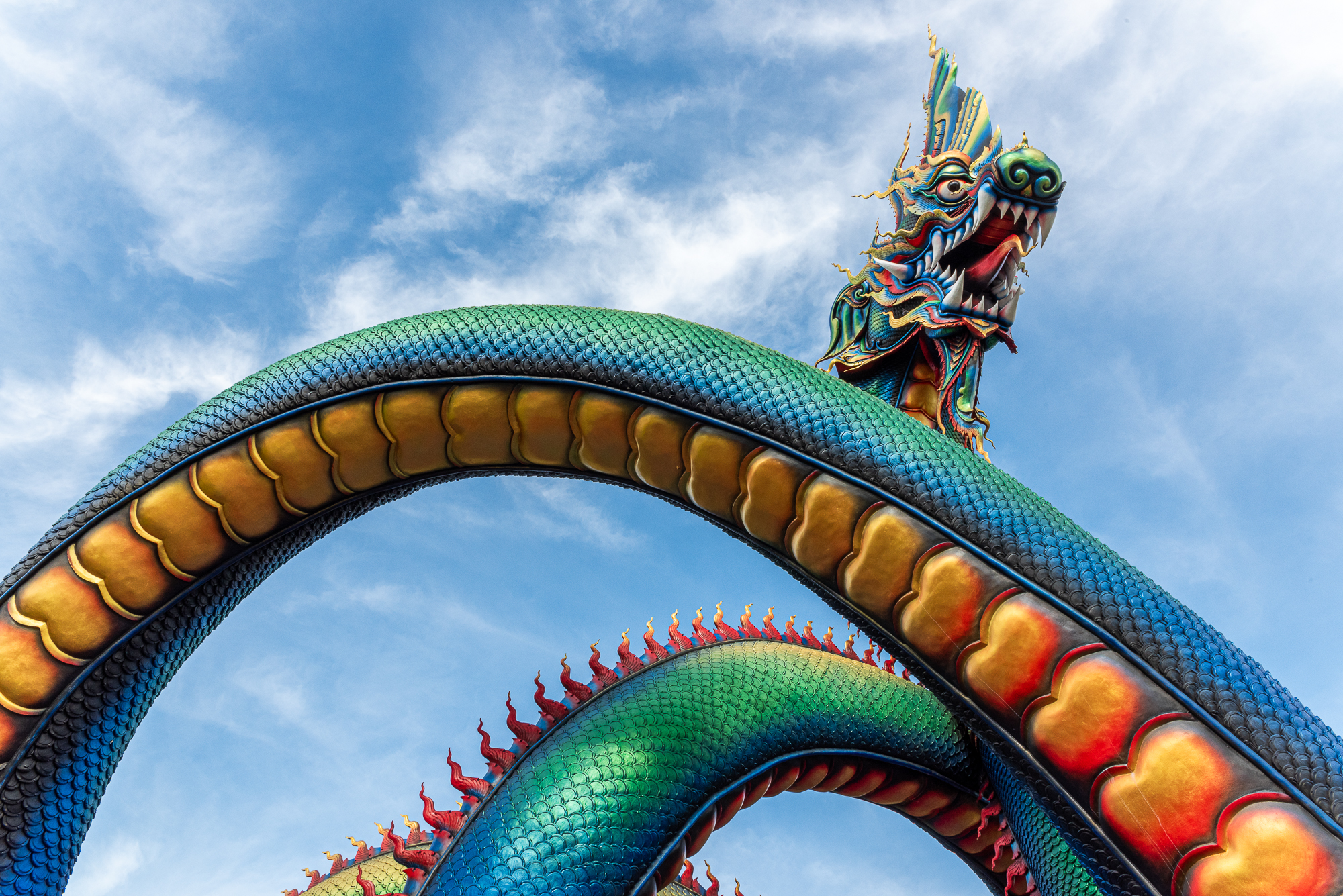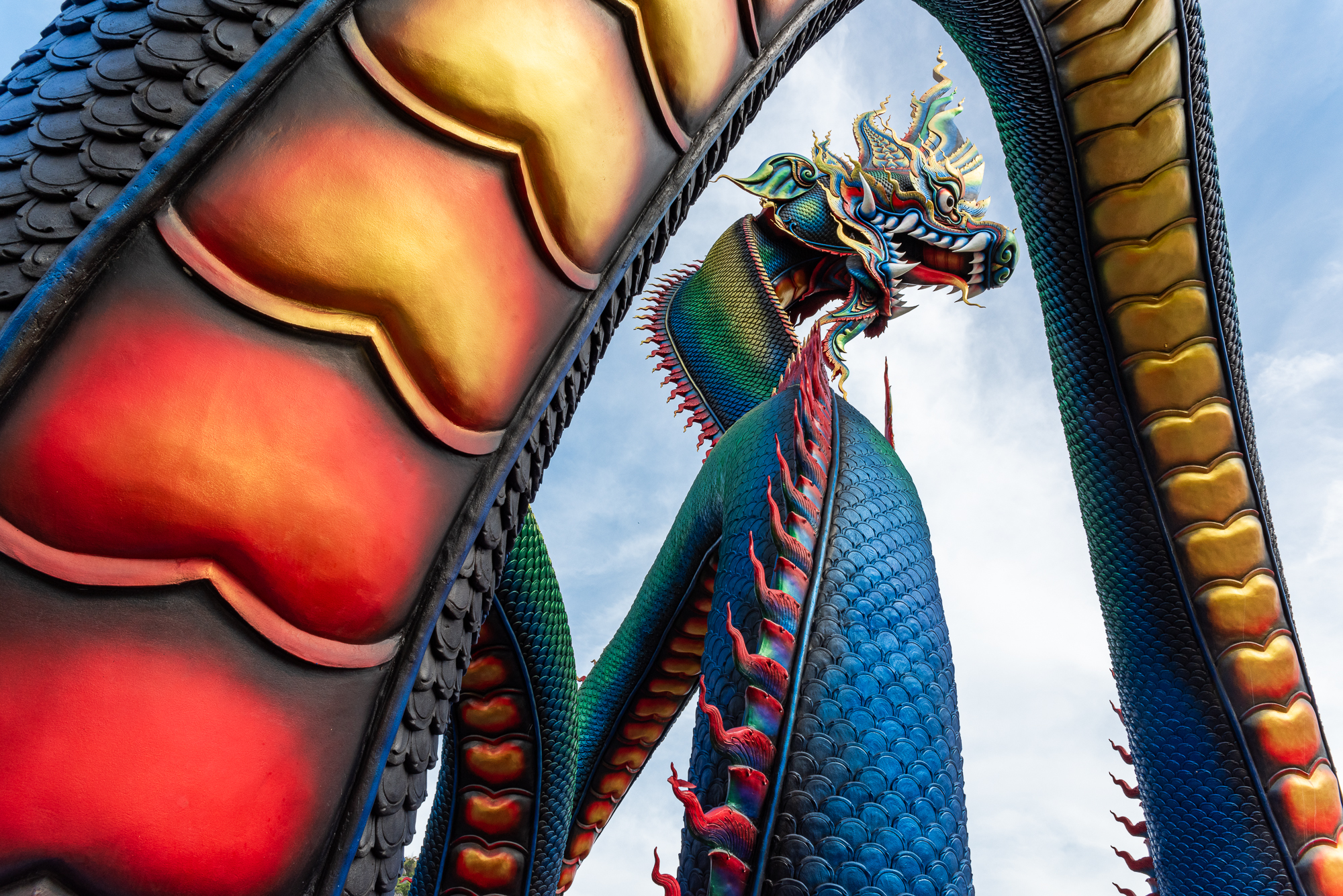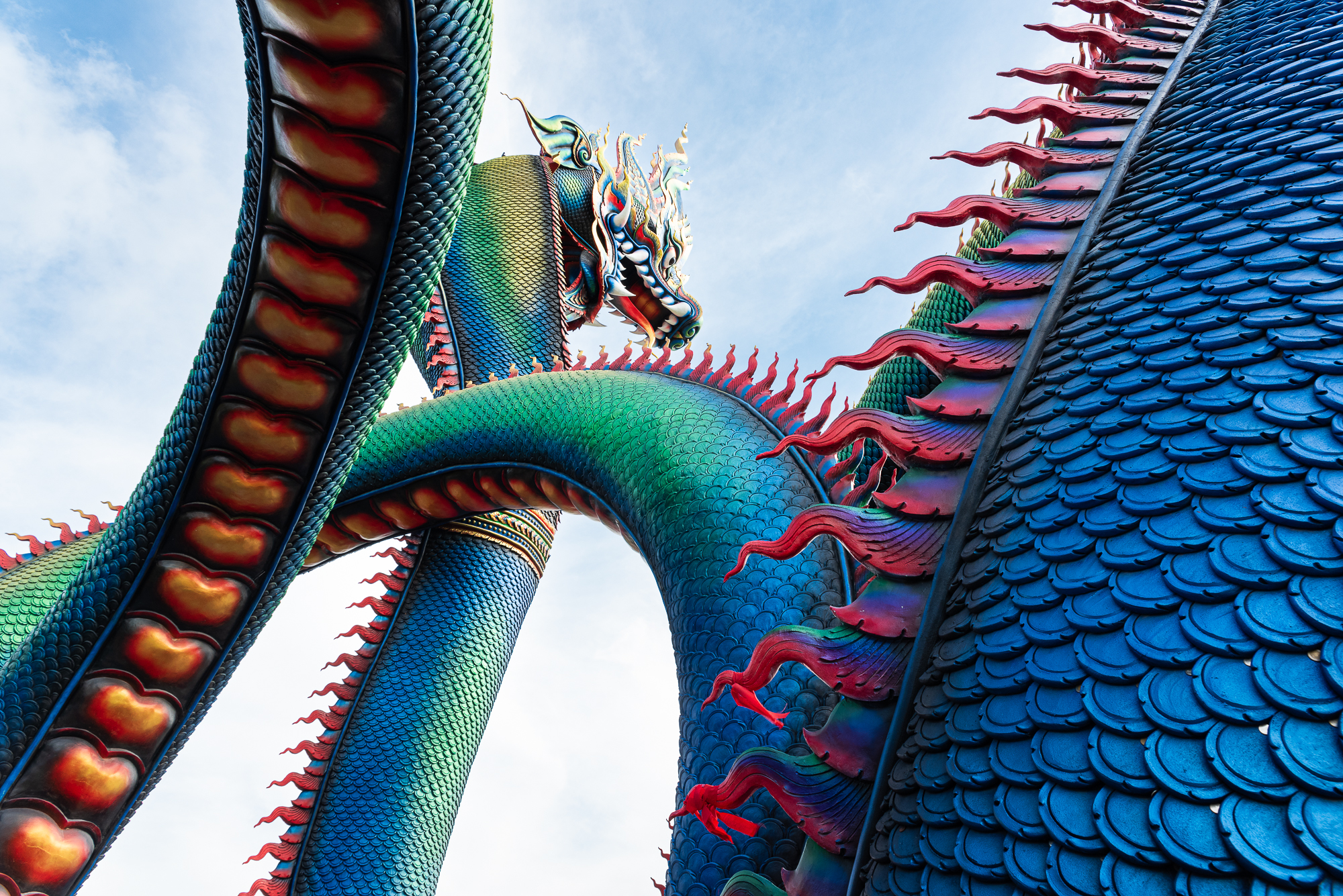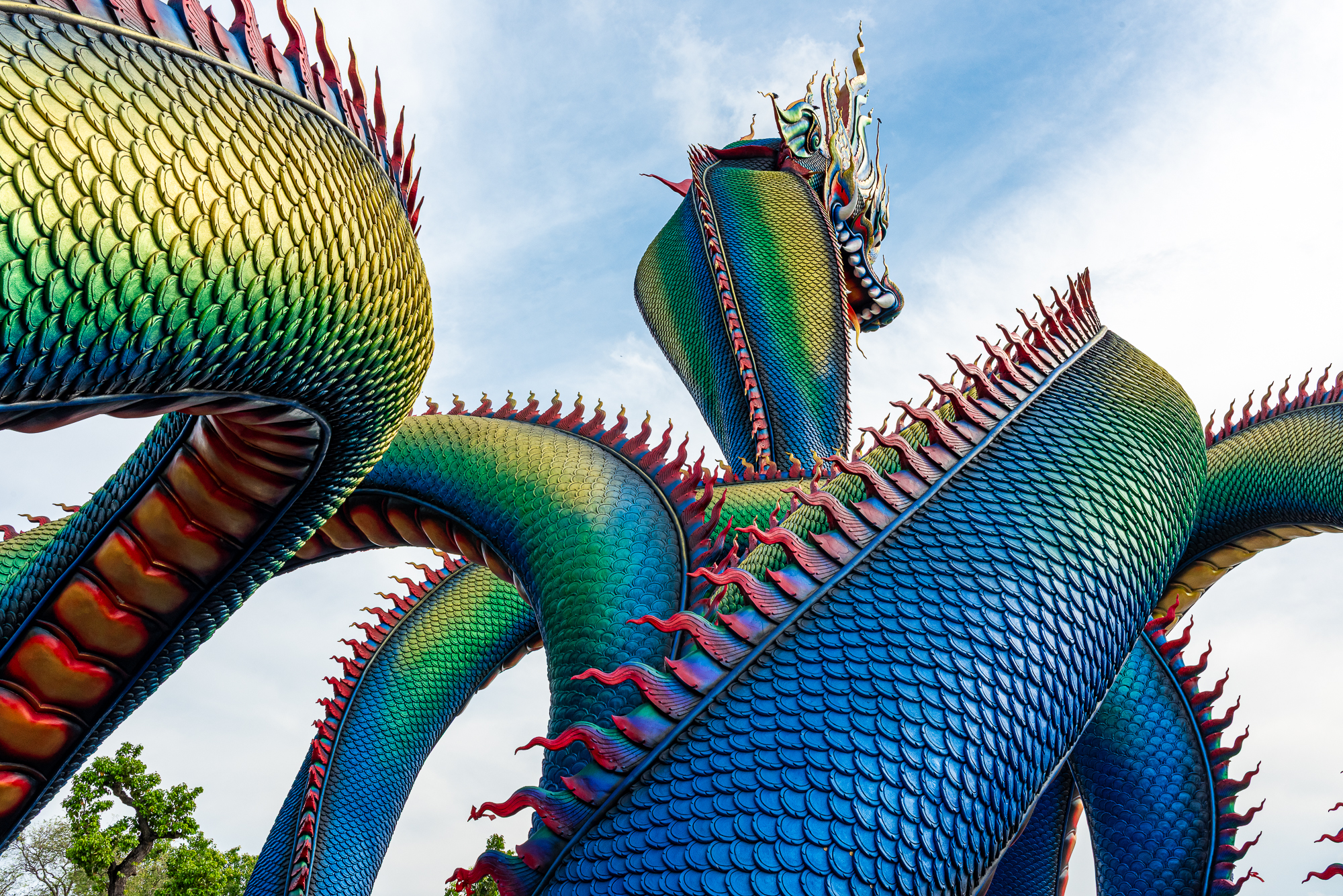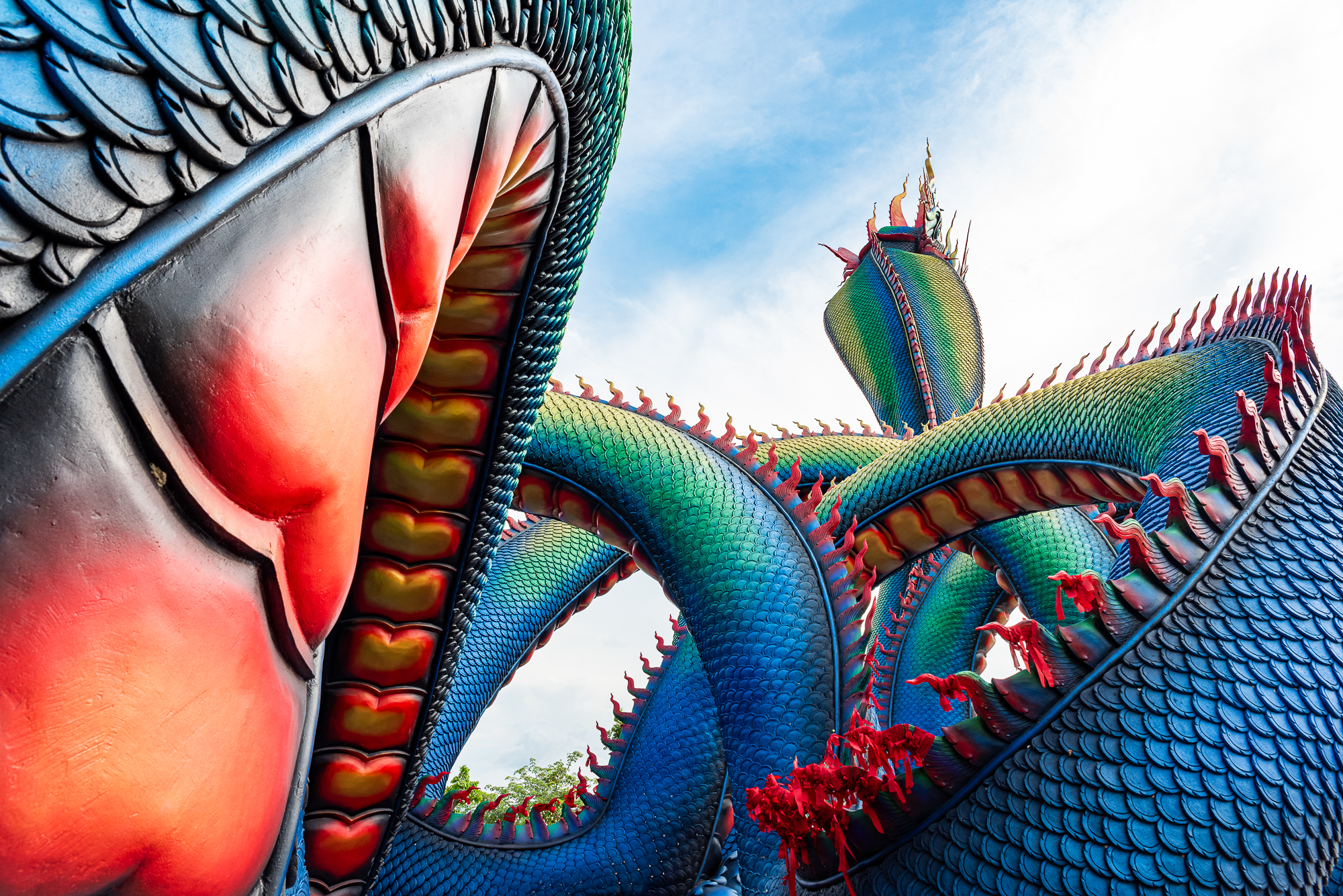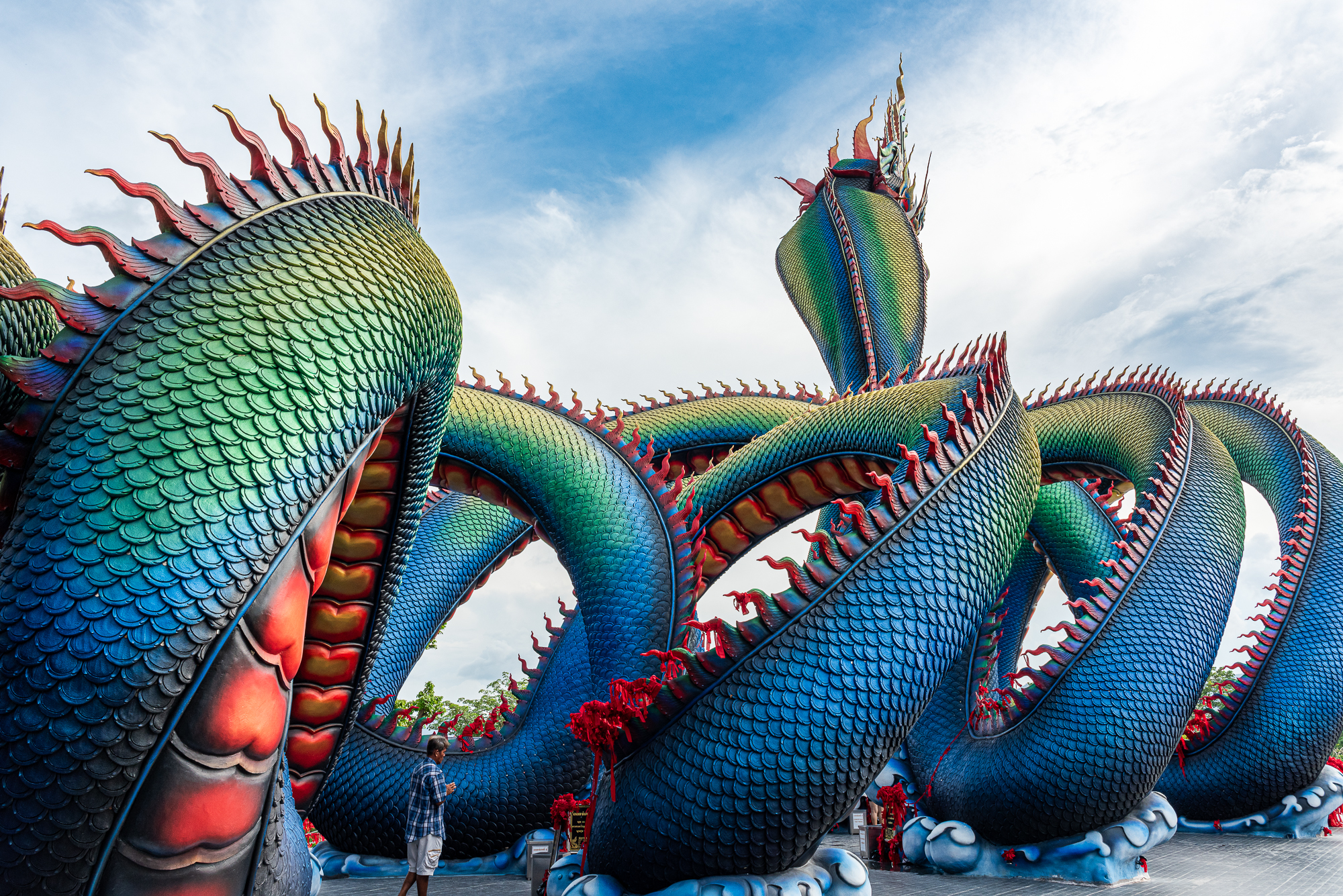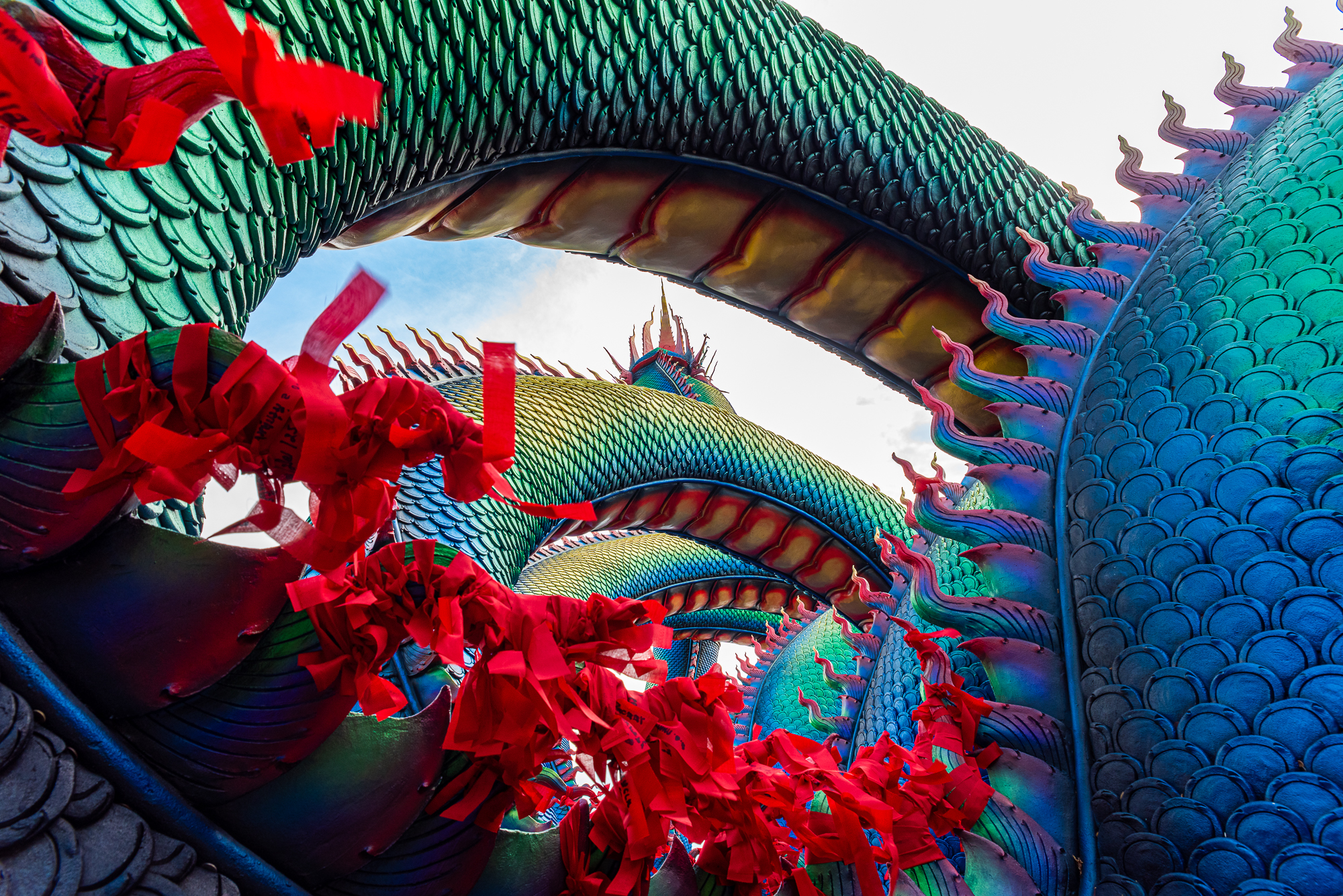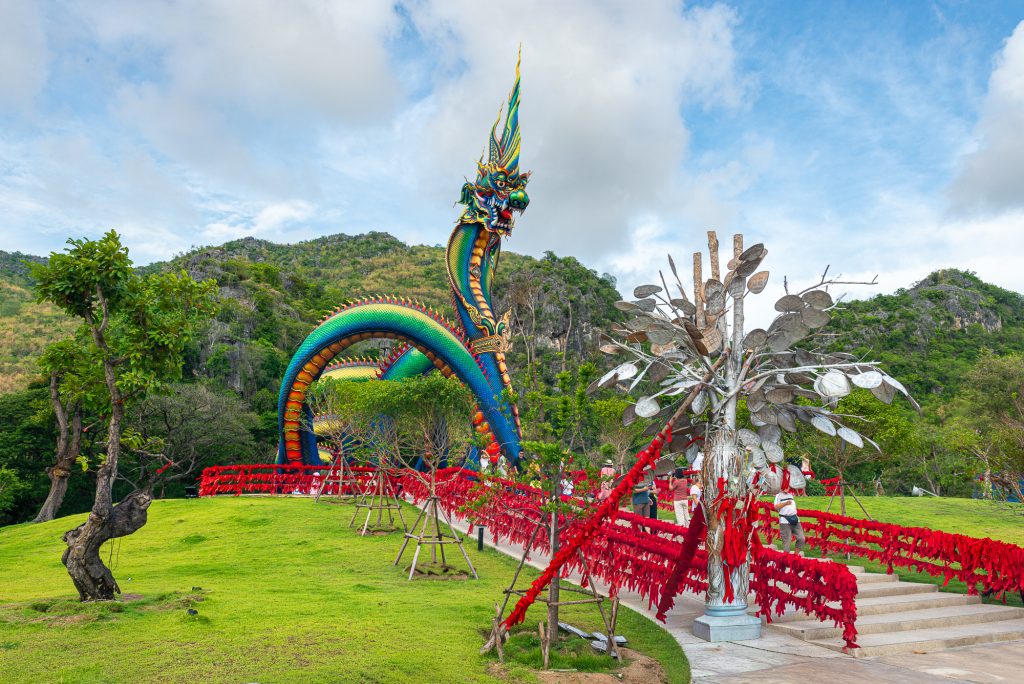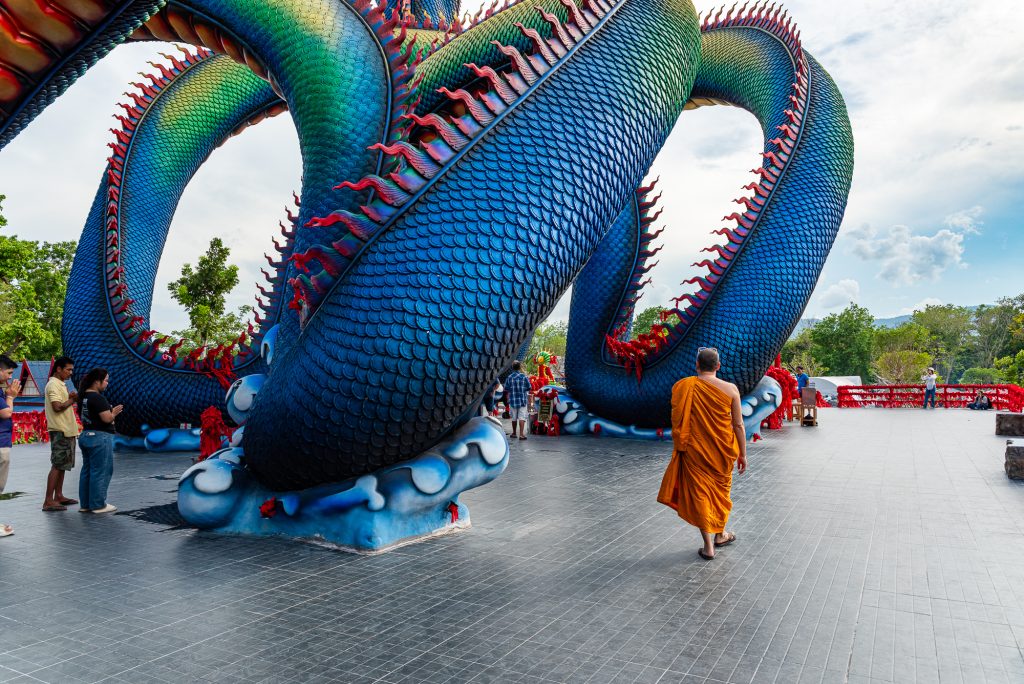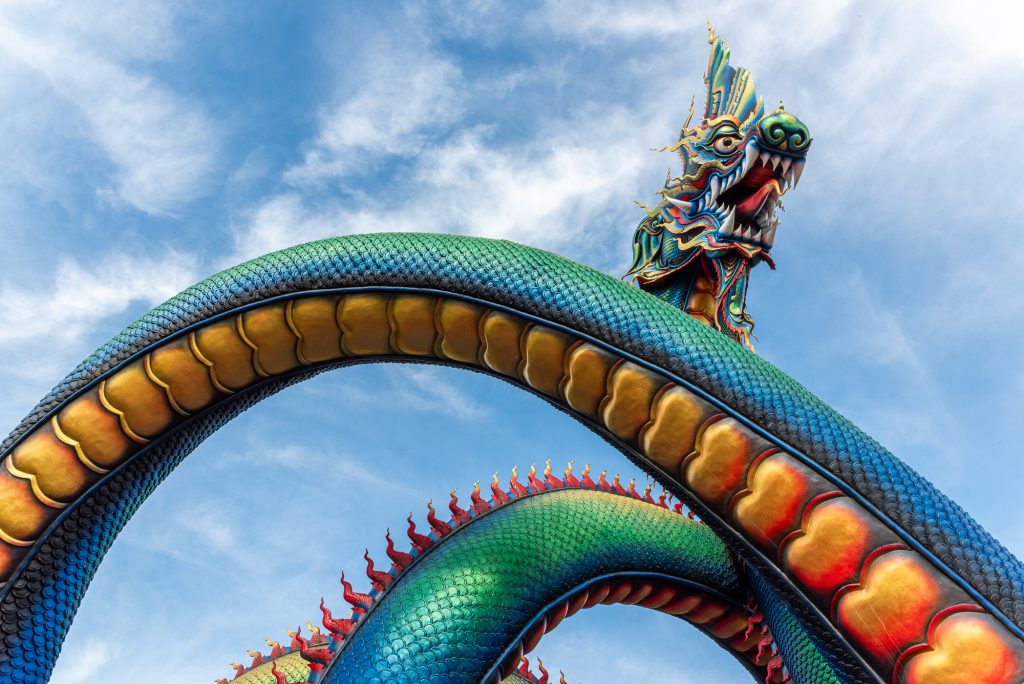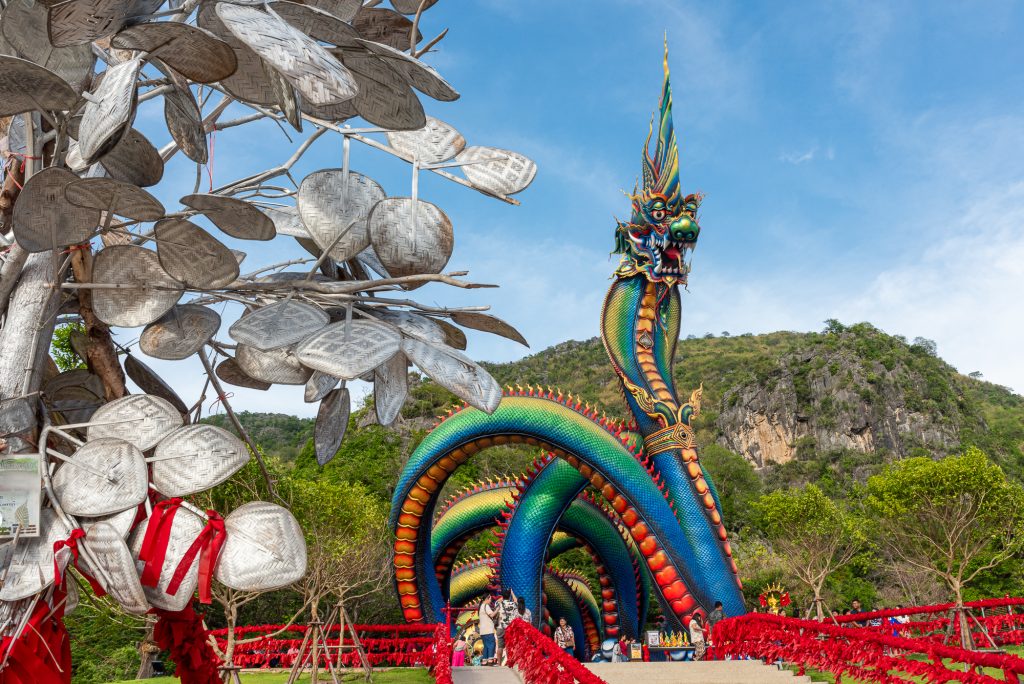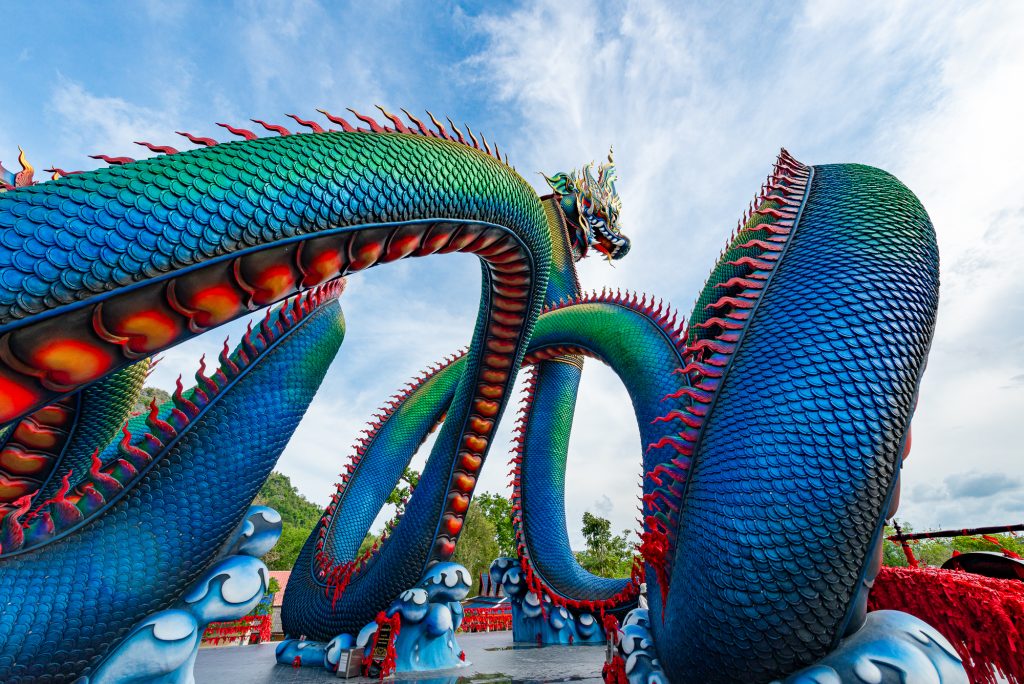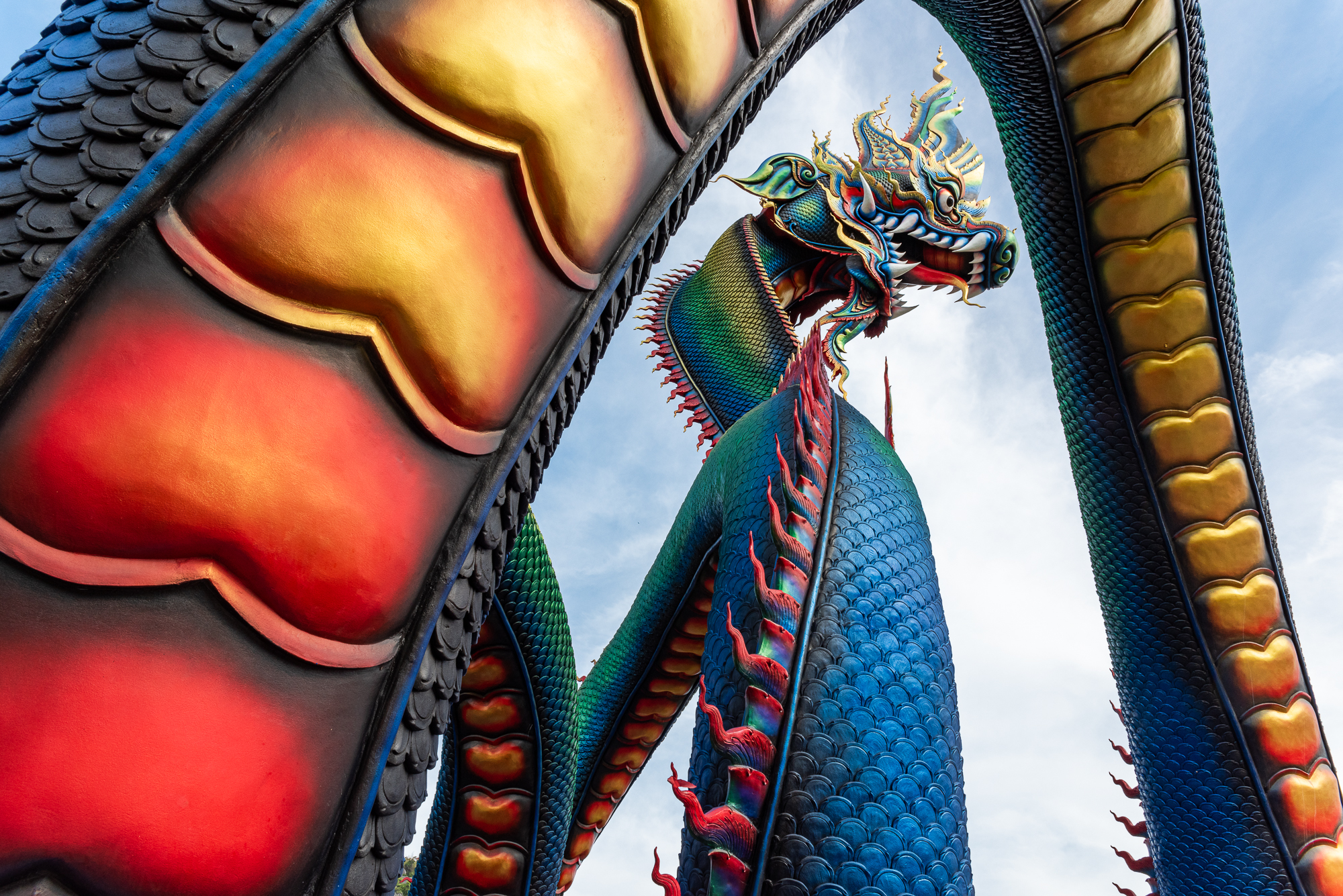
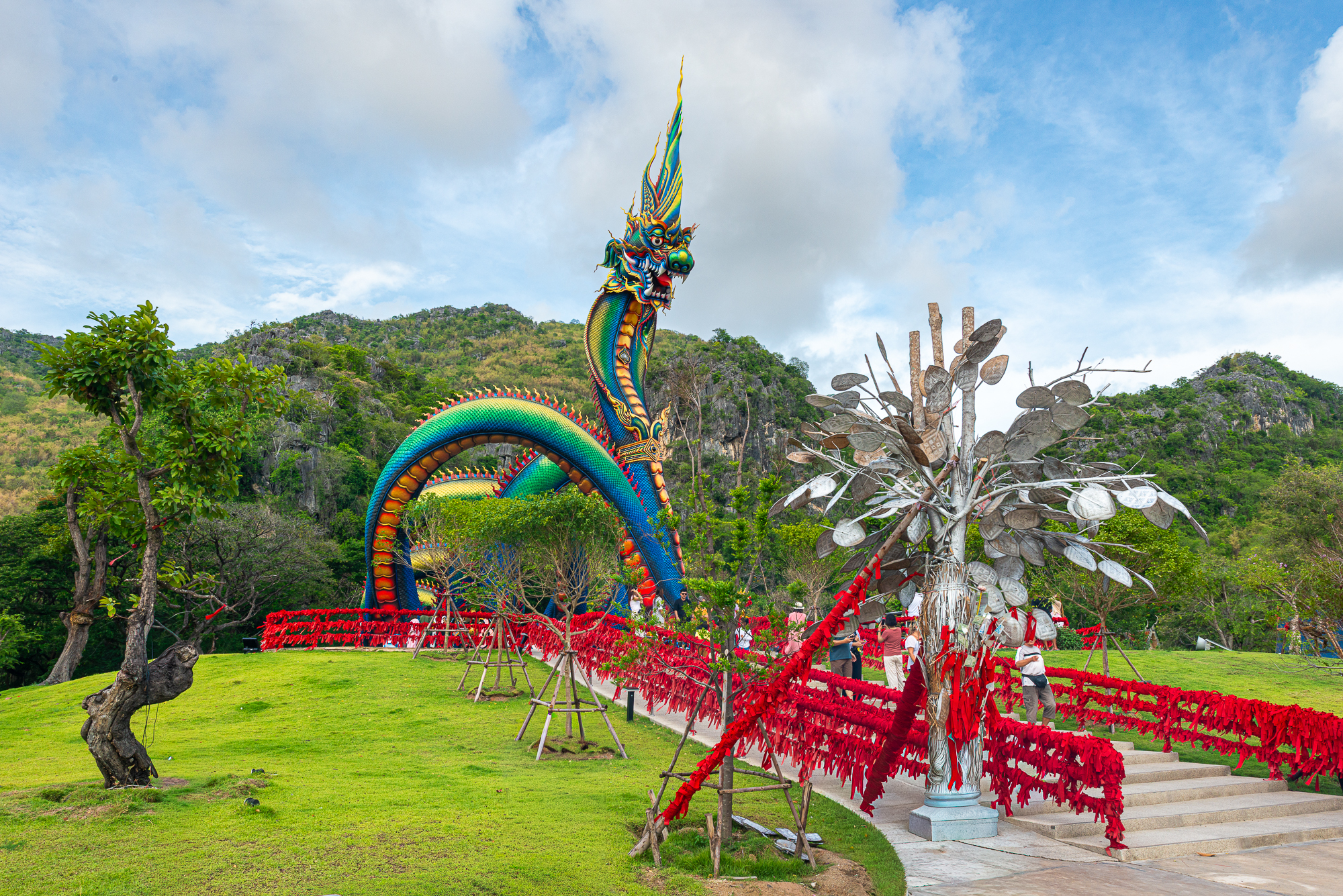
The dragon at Tham Chaeng Temple in Phetchaburi.
Ecrit parVenturelli Erick
Wat Tham Chaeng, between cave and devotion.
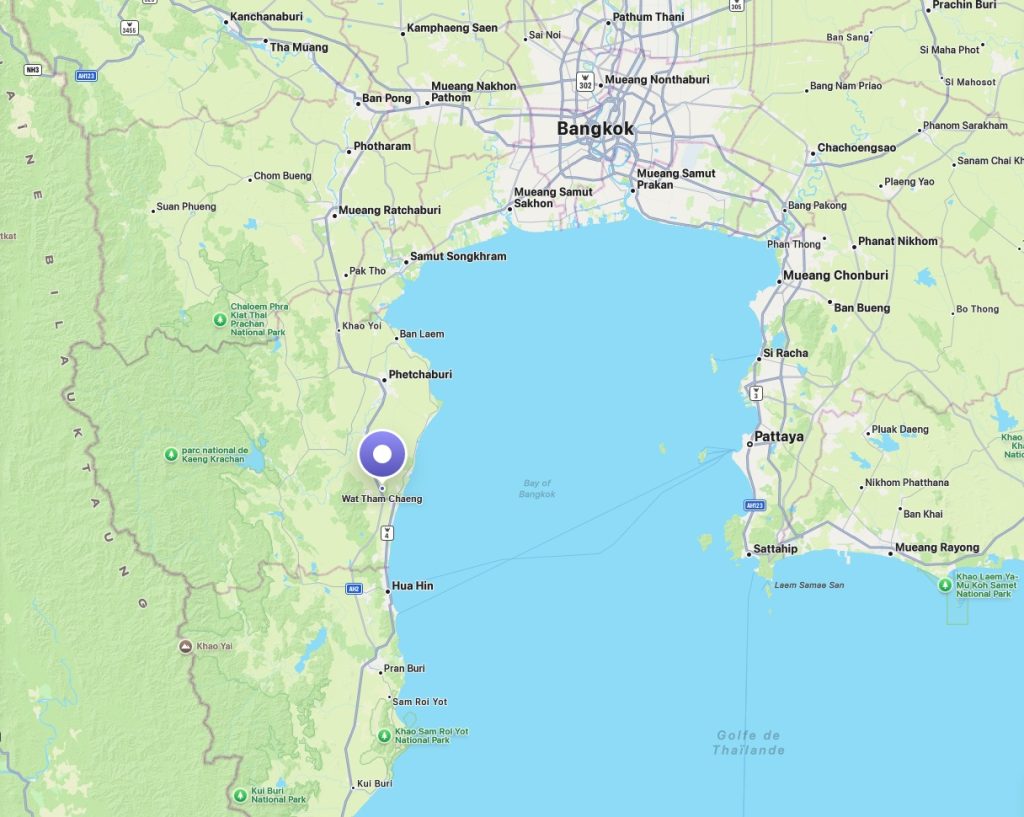
There are places that hold a special appeal for people. Wat Tham Chaeng occupies a unique place in the religious landscape of Phetchaburi Province. Situated in the district of Cha-am, this Buddhist temple is set in a region where the many shrines, sacred caves and places of meditation form part of the collective memory. Today, it is best known for its immense naga statue, which has become a visual and spiritual landmark for visitors and locals alike.
The history of the place is linked to the site’s gradual development. Local and travel sources indicate that it originally existed as a small monastery or a modest religious site, before being further developed over time. One account mentions the temple’s ancient origins, followed by a modern transformation that has enhanced its regional profile. This continuity between the ancient place of worship and its contemporary design partly explains its current appeal.
The central feature of Wat Tham Chaeng is the naga (serpent dragon), a major figure in Thai symbolism. In local tradition, the naga is associated with protection, prosperity and spiritual power. Its presence in the temple is not merely decorative: it gives the place a ritual function, by linking beliefs of the people, Buddhism as practised and imaginary mythological. The monumental statue, often described as the largest in Thailand, has reinforced this aspect and attracted a large number of pilgrims.
The culture of merit.
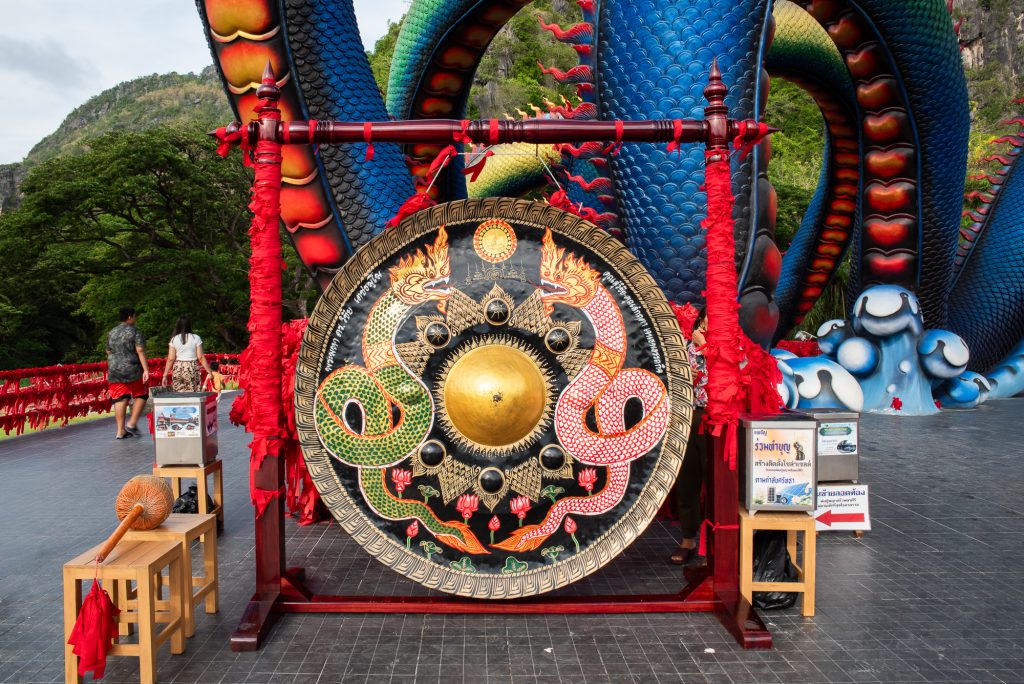
Wat Tham Chaeng blends naturally into the local culture because it reflects the very much living practices of Thai Buddhism. Worshippers come here to meditate, make offerings, pray and ask for protection or good fortune in their lives. The temple is therefore not merely a monument; it functions as a social space where faith is expressed through concrete acts, shared amongst families, monks and visitors.
This community aspect is significant in Phetchaburi, where temples serve as landmarks in everyday life as well as sacred sites. Wat Tham Chaeng attracts not only local residents but also visitors keen to discover a site where religion, monumental art and spiritual tourism converge. In this sense, the temple contributes to the local circulation of beliefs and to the province’s profile.
The site’s popularity also illustrates how contemporary forms of devotion intertwine with ancient traditions. Pilgrims are not merely seeking a place to admire; they are seeking a place where the religious experience is made tangible through architecture, statues, rituals and the natural setting. It is this combination that gives Wat Tham Chaeng its special place in the region’s religious identity.
Wat Tham Chaeng is a fine example of how a temple can become a local symbol whilst retaining its spiritual function. Its recent history, its connection with the naga and its role in merit-making practices make it a place that is both modern and deeply rooted in Thai culture. In Phetchaburi, it represents a meeting point between tradition, popular belief and tourist appeal.
Phetchaburi (Thailand) – May 2026